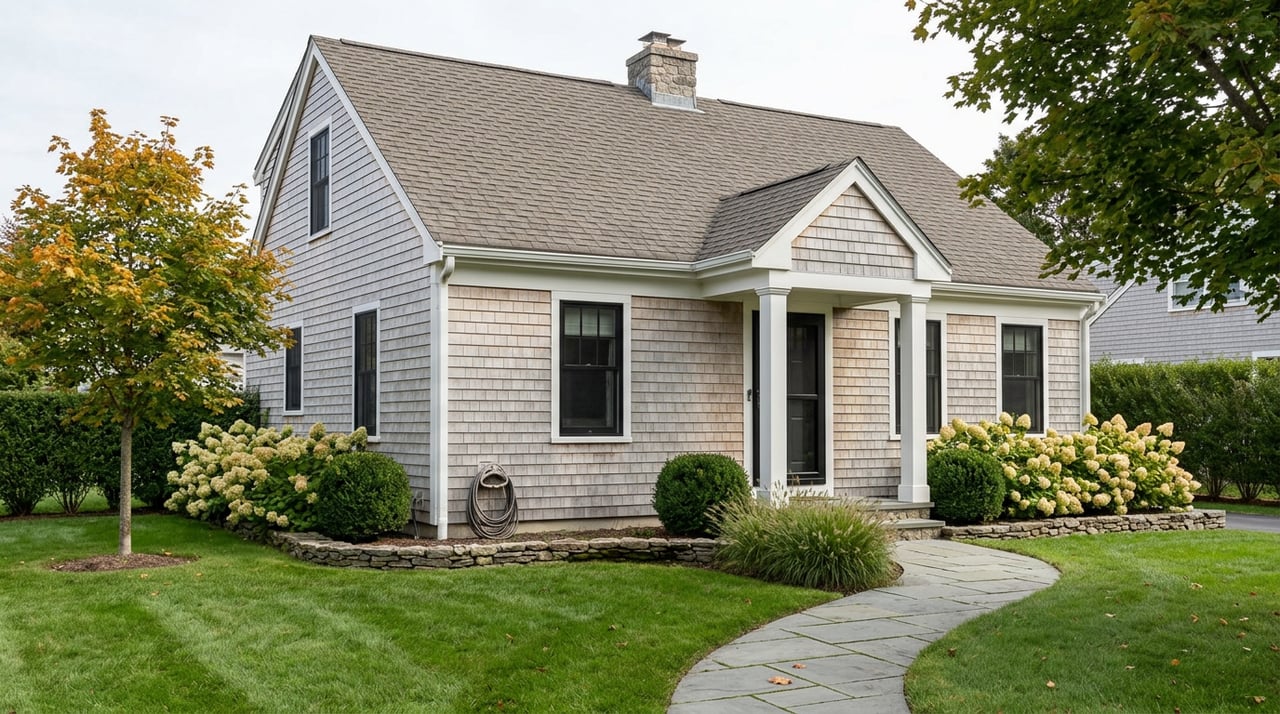
In Stratford, the Tax Bill on Every Listing Sheet Is Only One Third of the Story
September 3, 2026
September 3, 2026
"The phase in... gives the most immediate relief possible," Stratford Councilman William Boyd told his colleagues in May, defending the three-year plan the Town Council had just adopted to soften a property tax increase years in the making. He wasn't wrong. What the soundbite leaves out is that relief, in this case, means delayed rather than reduced. The bill a Stratford homeowner opened this summer reflects only a fraction of what the town's own revaluation says that property is worth today. Two more increases are already written into town policy, scheduled to land in 2027 and 2028 whether the town spends another dollar or not.
That detail matters more than a median price if you're buying or selling in Stratford this fall. The number on a listing sheet or a closing disclosure right now is one year into a three-year phase-in. It is not the number a new owner will be paying by the time the schedule finishes.
Connecticut law requires towns to revalue real estate every five years so assessments keep pace with market value. Stratford's update was due in 2024 but was delayed a year after the town's assessor left the position, so the new figures took effect October 1, 2025, and landed on the Grand List that funds the fiscal year which began this July. When the results came in, Mayor David Chess reported that residential assessments had jumped roughly 80 percent on average, with some homes rising even more. Commercial property, the office parks, retail plazas, and industrial buildings, rose only about 22 percent.
Chess, a businessman and physician who unseated eight-year Republican Mayor Laura Hoydick last November, inherited the fallout from his first budget season. Hoydick had held the tax rate flat at 39.46 mills for most of her tenure before raising it once to 40.20 in 2023. Nothing in that recent history prepared homeowners for an 80 percent jump in assessed value in a single cycle.
Connecticut's tax formula is simple on paper: assessment multiplied by mill rate equals the bill. Because total assessed value across Stratford grew so much, basic math meant the mill rate had to fall just to raise the same budget dollars. Applied against the full new assessments, the math would have driven the rate down to about 28.27 mills. Instead, the Council chose to phase the increase in over three years rather than apply it all at once, and set the adopted rate at 37.73 mills to match that partial base. The rate looks higher than the fully-revalued 28.27 because it is being multiplied against only part of the assessment increase this year, not the whole thing.
Republican Councilman Carl Glad, who voted against the final budget, pointed to the other half of the story: because commercial assessments rose only 22 percent against 80 percent for homes, the same revaluation shifted a real share of the town's tax burden from businesses onto residential owners. That shift is arithmetic, not politics. It shows up in every Stratford homeowner's bill regardless of which party controls the Council.
The town's own description of the plan is that it spreads the assessment increase over three years, applying roughly a third of it each year until the full new value lands on the books.
| Fiscal Year | Phase-In Year | Share of Increase Applied | Status |
|---|---|---|---|
| 2026-27 | Year 1 | About one third | Current bills, already mailed |
| 2027-28 | Year 2 | About two thirds | Next bill, due summer 2027 |
| 2028-29 | Year 3 | Full increase | Full revaluation reflected |
The Council has not yet set next year's mill rate or budget, so the exact dollar increment in years two and three isn't locked in. What is settled is the direction: absent a policy change, each of the next two bills will apply more of the 2025 revaluation than the one before it.
A buyer closing in Stratford this fall is buying into Year 1 of that schedule. The tax figure on the listing sheet, and the number a lender plugs into an escrow calculation, reflects only the partial phase-in, not the number due in 2027 or 2028. Two more mechanical increases are coming even if the new owner never requests a single additional town service.
For a financed purchase, that cuts twice. First, on affordability: a bill that grows for two more years without any action on the owner's part is a bill a household budget needs room for now, not later. Second, on the monthly payment itself: mortgage servicers recalculate the escrowed tax portion each time the actual bill changes, so a payment that looks fixed at closing can still rise in year two and year three purely from the phase-in completing, with no rate change and no refinance involved. The question worth asking before signing anything is which year of the phase-in the current bill represents, and what the seller's most recent notice from the town shows for the assessment itself, not just the bill.
Earlier this year, the state legislature considered repealing an existing property tax exemption option and instead expanded it. Municipalities can now choose to discount the assessed value of owner-occupied primary residences by 5 to 35 percent, or offer a flat $50,000 exemption instead, but not both in the same year. The change takes effect for assessment years starting October 1, 2027, which lines up with Year 2 of Stratford's phase-in.
Chess has said he wants to bring the Homestead Act option to the Council for the 2027-28 budget season. As of now, only New Milford has adopted a version of it statewide, so there's no local track record to point to, only a live decision that hasn't been made. If the Council adopts an exemption, the effective number owners pay in year two could land lower than a straight read of the phase-in schedule would suggest. Nobody can hand a buyer a guaranteed 2027-28 number today. What a buyer and seller can do is ask the question now and revisit it once the Council's decision becomes public.
If you're selling this fall, be ready to walk a buyer through where your property actually sits on the phase-in schedule, not just what last month's bill says. Buyers are asking sharper questions about this than they used to, and an answer grounded in the town's own numbers builds more trust than a sheet that quietly assumes this year's bill is next year's bill.
If you're buying this fall, build room in your budget for at least one more scheduled increase beyond the current bill, and ask your lender how they plan to reassess escrow as the phase-in advances. A property that already reflects the full three-year phase-in is a different calculation than one that's only one year in.
This is the kind of math I spent years working through as a member of Stratford's Board of Assessment Appeals, long before I was helping clients buy and sell homes here. Assessment mechanics aren't a footnote to a Stratford transaction this year. They're part of the numbers that belong on the table before anyone signs.
Does the phase-in change how much I owe today, or just delay a future increase? Both. It reduced what would have hit this year's bill under a full, immediate revaluation, but it did not erase the increase. It spread it forward, so two more scheduled additions are coming over the next two fiscal years.
Will my mortgage payment change even if my interest rate doesn't? It can. If your loan escrows for property taxes, the servicer recalculates that portion of your payment whenever the actual town bill changes, which will happen at least twice more as the phase-in completes.
When is Stratford's next full revaluation? State law calls for revaluations every five years. Stratford's 2025 cycle was itself delayed a year from its original 2024 target, so the next one is expected around 2029, though the exact date could shift again depending on staffing and state scheduling.
Property tax mechanics like these are exactly where a longtime local agent earns their keep, translating a town council vote into what it actually means for your closing table. If you're weighing a Stratford purchase or sale and want help reading the numbers behind the numbers, Joe Paul is glad to walk through it with you. Let's Connect.
Stay up to date on the latest real estate trends.


It will give me great pleasure to serve all your real estate needs, and I look forward to working for you. You’ll find me easy to work with and a good listener who keeps you, the client, well-informed.